


 Send Inquiry
Refractometer ABBE 2WAJ
Price 200000 INR/ Piece
Refractometer ABBE 2WAJ Specification
- Application
- Measurement of refractive index and sugar content in liquids, semi-liquids, and solids
- Resolution
- 0.0001
- Humidity
- Up to 85% RH
- Number of Specimens
- Single Sample Analysis
- Display Type
- Analog scale with reading eyepiece
- Automation Grade
- Manual
- Accuracy
- ±0.0002 (nD)
- Response Time
- Instantaneous reading
- Port Size
- Standard
- Mounting Type
- Bench Top
- Equipment Type
- Bench Top Abbe Refractometer
- Max Height
- Approx. 260 mm
- Power Supply
- 220V AC, 50Hz
- Test Range
- 1.3000 to 1.7000 (nD)
- Operating Voltage
- 220V AC
- Temperature
- 10°C to 30°C (with temperature compensation)
- Frequency
- 50Hz
- Measuring Range
- Refractive Index: 1.3000 to 1.7000
- Features
- Fitted with Abbe prism, Integrated temperature thermometer, Compact and sturdy design
- Specimen Size
- Approx. 0.1 ml
- Usage
- Chemical labs, Food industry, Sugar factories, Academic Research
- Machine Weight
- 10 kg
- Test Speed
- Manual Operation
- Control Mode
- Manual
- Prism Size
- 20 x 20 mm
- Prism Material
- Hard glass
- Light Source
- Monochromatic or white light
- Temperature Compensation
- Yes, with built-in thermometer (0-50C)
- Measurement Accuracy (Brix)
- 0.1%
- Calibration
- Manual
- Sample Volume Required
- 0.1 ml
- Instrument Dimensions
- 360 x 200 x 380 mm
- View Field Size
- 2 mm
- Eyepiece Magnification
- 6X
- Main Body Material
- Metal
About Refractometer ABBE 2WAJ
Refractometer
Ideal for measuring the refractive index of liquids, solids and sugar concentrations Indispensable instrument for industrial chemistry, petroleum, pharmaceutical, food oils and fats, sugars, universities.
Precision Measurement for Diverse Applications
The ABBE 2WAJ Refractometer is engineered for versatility, accommodating single-sample analyses of liquids, semi-liquids, and select solids. Its broad refractive index range (1.3000 to 1.7000 nD) and Brix measurement capability make it suitable for critical quality control in food processing, chemical laboratories, and educational institutions alike.
Innovative Features for Reliable Results
Equipped with a durable hard glass prism and a built-in thermometer for accurate temperature compensation, the ABBE 2WAJ provides consistent and precise readings across a wide range of environments. The analog scale and 6X magnification ensure easy viewing and interpretation, making analyses quick and dependable.
FAQs of Refractometer ABBE 2WAJ:
Q: How does the ABBE 2WAJ refractometer perform measurements?
A: The ABBE 2WAJ operates manually by placing a small sample (approximately 0.1 ml) on the hard glass prism. By looking through the 6X eyepiece, the user can instantly read refractive index or Brix values on the analog scale, aided by the integrated temperature compensation for accurate results.Q: What types of samples can be analyzed with this refractometer?
A: This device can accurately measure the refractive index and sugar content of liquids, semi-liquids, and certain solids, making it suitable for applications in chemical labs, the food industry, sugar production, and research settings.Q: When is temperature compensation especially beneficial during measurement?
A: Temperature compensation is crucial when sample and ambient temperatures vary between 10C and 30C. The built-in thermometer automatically adjusts readings to ensure precise results, even with slight temperature fluctuations.Q: Where is the best place to use the ABBE 2WAJ refractometer?
A: The instrument is designed for bench-top use, making it ideal for laboratories, quality control departments in food or sugar factories, academic institutions, and any environment requiring accurate refractive index or Brix assessment.Q: What is the calibration process for this instrument?
A: Calibration is done manually, typically using standard reference liquids with known refractive indices. This ensures the instrument remains accurate and reliable between uses.Q: What are the primary benefits of using an ABBE 2WAJ refractometer?
A: Users benefit from precise and rapid measurements, robust construction, ease of use, and reliable temperature-compensated results. Its compact design suits a range of professional applications and environments.Q: How much sample is needed for a single test?
A: Only about 0.1 ml of sample is required, allowing for efficient analysis even when sample volume is limited.

Price:
- 50
- 100
- 200
- 250
- 500
- 1000+

More Products in Food Testing Instruments Category
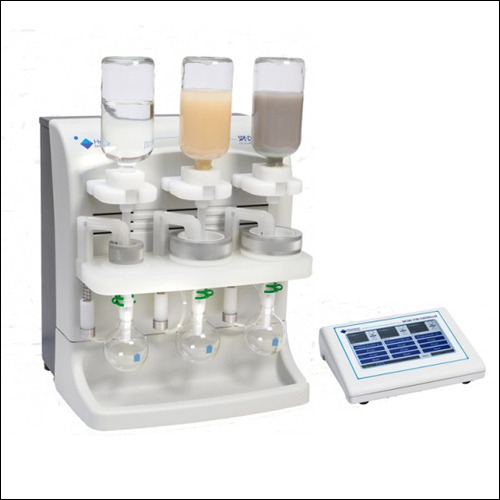
Solid Phase Extraction Unit-SPE
Minimum Order Quantity : 1 Piece
Temperature : 5C to 40C
Operating Voltage : Not required for basic/manual model
Machine Weight : Approx. 30 kg
Features : Corrosionresistant, easy glass manifolds, PTFE valves, reproducible flow
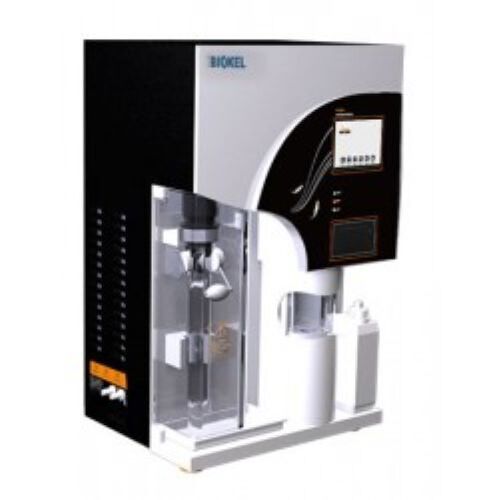
Kjeldahl Nitrogen Analyzer
Price 700000 INR / Number
Minimum Order Quantity : 01 Number
Temperature : 10C 35C
Operating Voltage : 220V AC
Machine Weight : 35 kg
Features : Automatic distillation and titration, programmable settings, safety protection

Water baths
Price 45000 INR / Piece
Minimum Order Quantity : 01 Piece
Temperature : Ambient to 100C (with thermostat)
Operating Voltage : 220V AC
Machine Weight : Approx. 1018 kg, depending on model
Features : Thermostat controlled, corrosionresistant inner chamber, transparent lid, easy drainage
Pump for Post Column Derivatization Systems
Price 100000 INR / Unit
Minimum Order Quantity : 01 Unit
Temperature : 5C 40C (Operating Range)
Operating Voltage : 230V AC
Machine Weight : Approx. 3.5 kg
Features : Chemically resistant wetted parts, maintenancefree operation, smooth flow with low pulsation

GST : 29AAGCD4887K1ZX


 Send Inquiry

Developed and Managed by Infocom Network Private Limited.


