


 Send Inquiry
Fully Automated Sample Preparation System Quechers
Fully Automated Sample Preparation System Quechers Specification
- Max Height
- 430 mm
- Display Type
- 7-inch Color Touchscreen
- Response Time
- <3 seconds
- Frequency
- 50/60 Hz
- Test Range
- 5 mL 100 mL
- Hardness
- Industrial grade construction
- Accuracy
- 1%
- Measuring Range
- 5 mg 10 g
- Temperature
- +10C +40C
- Number of Specimens
- Up to 8 simultaneously
- Resolution
- 0.1 mg
- Port Size
- 8-port sample module
- Operating Voltage
- AC 220V 10%, 50/60Hz
- Features
- Automated liquid handling, shaking and centrifugation
- Specimen Size
- 2 mL 50 mL
- Equipment Type
- Fully Automated Quechers Sample Preparation System
- Automation Grade
- Fully Automatic
- Interface Type
- USB, Ethernet
- Mounting Type
- Bench-top
- Gas Pressure
- 0.5 0.7 MPa
- Application
- Residue Analysis, Food Safety, Laboratory Use
- Humidity
- 20% 90% RH
- Power Supply
- 220V AC, 50/60Hz
- Usage
- Sample extraction for analytical testing
- Capacity
- 8 or 16 sample tubes
- Machine Weight
- 85 kg
- Test Speed
- 0.5 - 50 cycles/min
- Test Width
- Up to 100 mm
- Test Stroke
- 0 - 100 mm adjustable
- Control Mode
- PLC Touchscreen Control
- Safety
- Emergency stop and auto-door lock
- Solvent Addition
- Automated reagent and solvent dispensing
- Mixing Modes
- Variable speed vortex and orbital
- Sample Tube Compatibility
- 15 mL and 50 mL tube support
- Material
- Stainless Steel & Chemical-resistant Polymer
- Software
- PC Software for data management and method editing
- Noise Level
- <60 dB(A)
- Centrifugation Speed
- Up to 4000 rpm
- Protocol Support
- Classical Quechers & AOAC Methods
Fully Automated Sample Preparation System Quechers Trade Information
- Minimum Order Quantity
- 1 Piece
- Supply Ability
- 10 Pieces Per Week
- Delivery Time
- 30 Days
- Main Domestic Market
- Karnataka, All India
Fully Automated Sample Preparation System Quechers About
We have a team of self motivated and proficient professionals, helps us in offering Fully Automated Sample Preparation System Quechers. It can perform all the weighing in the sample and mixing of solvents & reagents whenever required. This system perfectly meets the needs of pharmaceutical department, food industry and biological analysis laboratory. Fully Automated Sample Preparation System Quechers has flexible design of experimental workflows via drag and drop. It is a perfect solution for analysis of pesticide residues in food and agricultural products.
Features:
- Precise liquid handling
- Optional pH-measurement
- Decreases sample turnaround time
Automated Performance and Protocol Flexibility
This state-of-the-art sample preparation system fully automates Quechers extraction and cleanup protocols, supporting both classical Quechers and AOAC official methods for flexibility in laboratory workflows. Automated liquid handling, variable mixing, and centrifugation simplify complex steps, reducing hands-on time substantially. Users can switch protocols or edit methods via intuitive PC software, enhancing reproducibility and efficiency.
Designed for High Throughput and Versatile Sample Handling
With a capacity of up to 16 sample tubes and the ability to process eight specimens at once, this system is tailored for laboratories demanding both throughput and flexibility. It is compatible with a variety of tube sizes and supports a broad test range from 5 mL to 100 mL. The 8-port module, adjustable test stroke, and precise solvent addition enable reliable and repeatable preparation of diverse sample types.
User Safety, Accuracy, and Laboratory Integrity
Safety is paramount, with an emergency stop and an automatic door lock mechanism ensuring operator protection. The system achieves impressive measurement accuracy (1%) and fast response times (<3 seconds). Built with durable, chemical-resistant materials and operating quietly (<60 dB(A)), the system is a robust addition to any bench-top laboratory environment, suitable for long-term use in challenging settings.
FAQs of Fully Automated Sample Preparation System Quechers:
Q: How does the fully automated Quechers system simplify sample preparation for residue analysis?
A: The system automates key processes such as liquid handling, mixing, centrifugation, and solvent addition, streamlining sample preparation for residue analysis and ensuring consistent results while reducing manual intervention.Q: What sample tube sizes and capacities can the system accommodate?
A: It supports both 15 mL and 50 mL tubes, with configurations for 8 or 16 sample tubes, allowing users to process up to eight specimens simultaneously across a measuring range of 5 mg to 10 g.Q: When should laboratories consider using this Quechers system?
A: Laboratories should use this system when fast, accurate, and reproducible sample extraction is required for residue analysis, food safety, or other analytical testing, particularly in high-throughput environments.Q: Where can the system be installed and used?
A: With its bench-top mounting and industrial-grade construction, the system is suitable for installation in analytical, food safety, or quality control laboratories across India and globally.Q: What is the process for adapting protocols or methods on this equipment?
A: Operators can easily adapt or create methods using the included PC software, which enables straightforward editing, data management, and protocol customization compliant with classical and AOAC Quechers methods.Q: How does the system ensure user safety during operation?
A: Safety is ensured through features like an emergency stop button and auto-door lock, which prevent access to the working chamber during operation and allow immediate system shutdown if needed.Q: What are the main benefits of using the fully automated Quechers system over manual preparation?
A: Main advantages include increased speed and throughput, improved consistency and reproducibility, reduced risk of human error, lower noise levels, and enhanced operator safety, making laboratory workflows more reliable and efficient.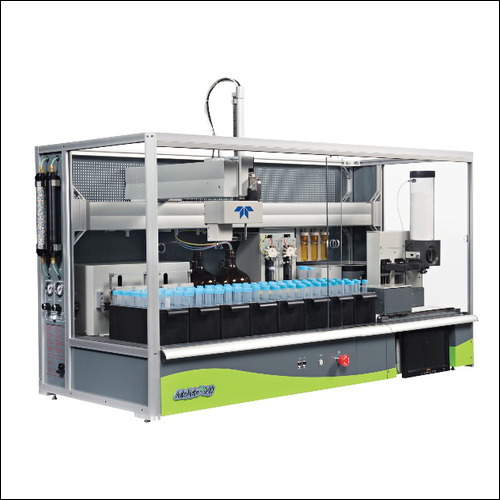

Price:
- 50
- 100
- 200
- 250
- 500
- 1000+

More Products in Food Testing Instruments Category
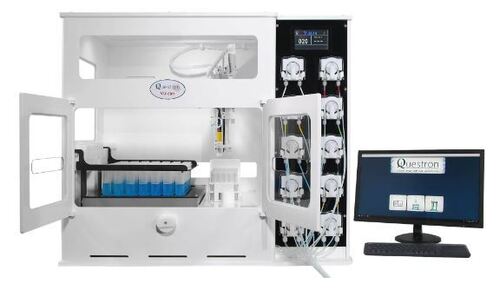
Hot Block Automated Digestion System- Vulcan
Price 2500000 INR / Piece
Minimum Order Quantity : 01 Piece
Features : Preprogrammed and customizable methods, automatic reagent dispensing, exhaust system, error indication, sample tracking, data export capability
Automation Grade : Fully Automatic
Capacity : 12 / 25 / 54 sample tubes per batch
Application : Sample Digestion (Soil, Water, Food, Waste, and Biological Samples)
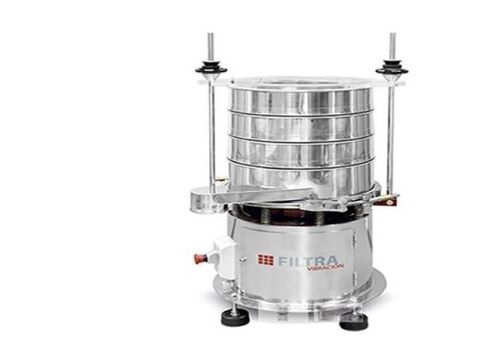
Sieve Shaker- Vulcano
Price 250000 INR / Piece
Minimum Order Quantity : 01 Piece
Features : Programmable time, variable amplitude, robust construction
Automation Grade : Automatic
Capacity : 8 Sieves per test
Application : Particle size analysis in laboratories
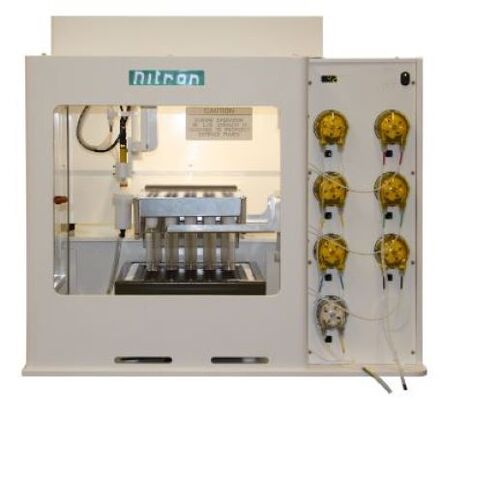
Automated Sample Digestion System- Nitron
Price 2500000 INR / Piece
Minimum Order Quantity : 01 Piece
Features : Preset programs, programmable temperature profile, higher safety & corrosion resistance, autolift mechanism, acidresistant construction, exhaust system
Automation Grade : Fully Automatic
Capacity : 6/8/12 samples per batch
Application : Acid digestion of samples for Kjeldahl, heavy metals, environmental, agricultural, food & pharma analysis
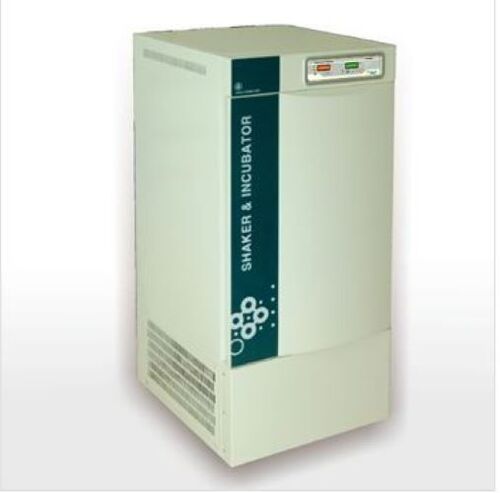
Refrigerated Incubator with Built-in Shakers
Price 200000 INR / Piece
Minimum Order Quantity : 01 Piece
Features : Programmable time & temperature, adjustable shaking speed, interior illumination, alarms for overtemp and door open
Automation Grade : Fully Automatic
Capacity : Total platform: up to 36 flasks (250 ml each), configuration dependent
Application : Cell culture, fermentation studies, enzyme reaction, bacterial growth, tissue culture, and more

GST : 29AAGCD4887K1ZX



 Send Inquiry
Developed and Managed by Infocom Network Private Limited.
