


 Send Inquiry
UV TRANSILLUMINATOR
Price 100000 INR/ Piece
UV TRANSILLUMINATOR Specification
- Display Type
- None (requires external viewer or gel documentation system)
- Automation Grade
- Manual
- Resolution
- High contrast UV illumination
- Specimen Size
- Fits standard gel sizes (e.g., 810 cm, 1515 cm)
- Operating Voltage
- 230V~50Hz
- Power Supply
- 230V AC, 50 Hz
- Equipment Type
- UV Transilluminator
- Frequency
- 50 Hz
- Application
- Visualization of nucleic acids and proteins in gels
- Mounting Type
- Table Top
- Humidity
- 10%80% RH
- Temperature
- 5C40C
- Response Time
- Instantaneous on activation
- Max Height
- Approx. 120 mm
- Features
- High-intensity UV bulbs, uniform illumination, safety UV filter shield
- Usage
- Laboratory gel documentation and observation
- Capacity
- Single gel at a time
- Machine Weight
- Approx. 7 kg
- Test Width
- 200 mm viewing area
- Control Mode
- Manual
- Dimensions (LWH)
- 320 250 120 mm
- Compliance
- CE Marked
- Viewing Surface Material
- UV transparent acrylic
- Lamp Life
- Approx. 8,000 hours
- Cooling
- Passive air vents
- Start-up Time
- <5 seconds
- Safety
- UV protection shield included
- Housing Material
- Powder-coated steel
- Light Uniformity
- >90% across viewing area
- UV Tubes
- 6 8W UV fluorescent tubes
- UV Wavelength
- 302 nm (standard, other wavelengths available)
UV TRANSILLUMINATOR About
UV Transilluminators
Contrast reinforced by improved filter characteristic sHomogeneously illuminated filter glass surface No additional filter needed at the camera lens Improved results with all fluorophores
Enhanced Safety Features
With a UV protection shield and a durable powder-coated steel housing, this transilluminator prioritizes laboratory safety. The UV transparent acrylic surface and protective shield reduce exposure risks while allowing for optimal specimen observation. This ensures compliance with laboratory safety standards, making the device suitable for routine nucleic acid and protein visualization.
Wide Application and High Uniformity
This equipment delivers over 90% light uniformity across its generous 200 mm viewing area, accommodating standard gel sizes for accurate molecular analysis. It finds extensive application in genetic and protein research, offering high-contrast illumination crucial for documentation and comparison. Its instantaneous response time further supports efficient lab workflows.
User-Friendly Manual Operation
Operated via manual controls, the transilluminator enables straightforward gel visualization without the need for complex training. Passive air cooling, fast start-up, and tabletop mounting make setup simple. It functions without an integrated display, supporting connection to external gel documentation systems for detailed analysis and record-keeping.
FAQ's of UV TRANSILLUMINATOR:
Q: How does the UV transilluminator enhance gel visualization in laboratory applications?
A: The transilluminator utilizes high-intensity UV bulbs at 302 nm to provide uniform, high-contrast illumination, making nucleic acids and proteins in gels distinctly visible. This facilitates accurate analysis and documentation essential for molecular biology research.Q: What safety measures are included to protect users during operation?
A: The unit features a UV protection shield and is housed in powder-coated steel, minimizing direct UV exposure and ensuring compliance with laboratory safety standards. The viewing surface is made from UV-transparent acrylic for visibility with reduced risk.Q: Which specimen sizes can be accommodated by this UV transilluminator?
A: It fits standard gel sizes commonly used in laboratories, such as 810 cm and 1515 cm, on its 200 mm wide viewing area, making it suitable for most routine gel documentation requirements.Q: Where can this equipment be placed within the laboratory environment?
A: The transilluminator is designed for tabletop mounting, allowing flexible placement on standard laboratory benches. Its compact dimensions (320 250 120 mm) and approximate 7 kg weight support easy integration into existing workflows.Q: How long does the UV transilluminator take to become operational after activation?
A: With a start-up time of less than 5 seconds and instantaneous response upon manual activation, it provides immediate illumination for time-sensitive laboratory tasks.Q: What is the typical service life of the UV lamps, and how is cooling managed?
A: The unit's six UV fluorescent tubes offer an approximate lamp life of 8,000 hours. Passive air vents ensure consistent heat dissipation, maintaining safe operating conditions without active cooling mechanisms.Q: What are the benefits of using this transilluminator for laboratory gel observation?
A: The device offers high-resolution and uniform UV illumination, improving visibility for gel analysis. Its robust safety features, rapid start-up, and manual controls contribute to reliable and efficient lab operations.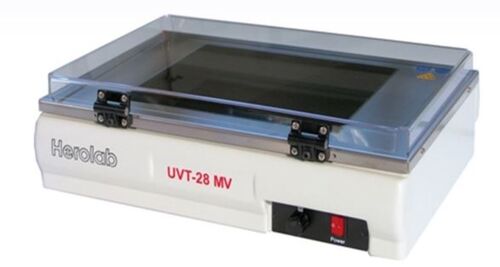

Price:
- 50
- 100
- 200
- 250
- 500
- 1000+

More Products in Research/ Institutional Instrument Category
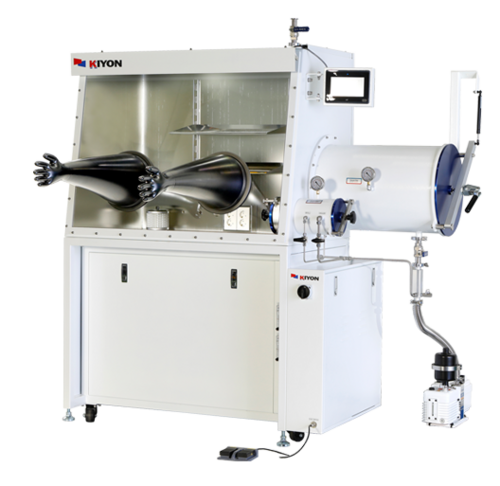
Glove Box System
Price 2100000 INR / Piece
Minimum Order Quantity : 01 Piece
Power Supply : 220240 V AC, 50 Hz
Operating Voltage : 220 V AC
Accuracy : 1% FS
Control Mode : Touch Screen PLC Control
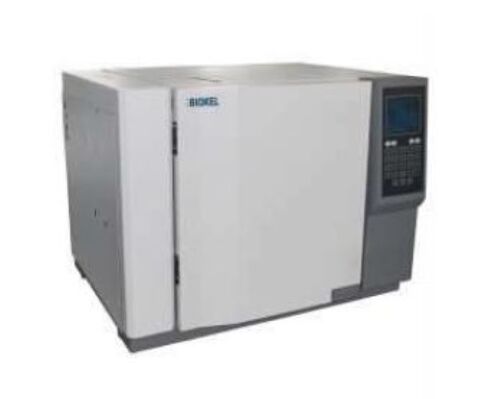
GAS CHROMATOGRAPHY
Price 600000 INR / Piece
Minimum Order Quantity : 01 Piece
Power Supply : 230 V AC, 50/60 Hz
Operating Voltage : 230 V AC
Accuracy : High up to 0.1% RSD
Control Mode : Manual/Automatic
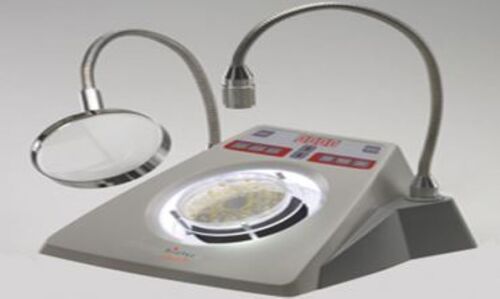
MANUALCOLONY COUNTER schuett count
Price 250000 INR / Piece
Minimum Order Quantity : 01 Piece
Power Supply : 230 V / 50 Hz or 115 V / 60 Hz (specify with order)
Operating Voltage : 230 V / 50 Hz or 115 V / 60 Hz
Accuracy : Manual counting; accuracy depends on operator
Control Mode : Manual operation with pressuresensitive counting pen
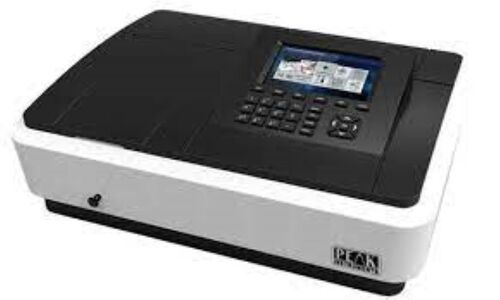
UV VIS SPECTROPHOTOMETER
Price 250000 INR / Piece
Minimum Order Quantity : 01 Piece
Power Supply : AC 220V 10%, 50Hz
Operating Voltage : 220 V
Accuracy : 0.5% T
Control Mode : Automatic

GST : 29AAGCD4887K1ZX



 Send Inquiry
Developed and Managed by Infocom Network Private Limited.


